
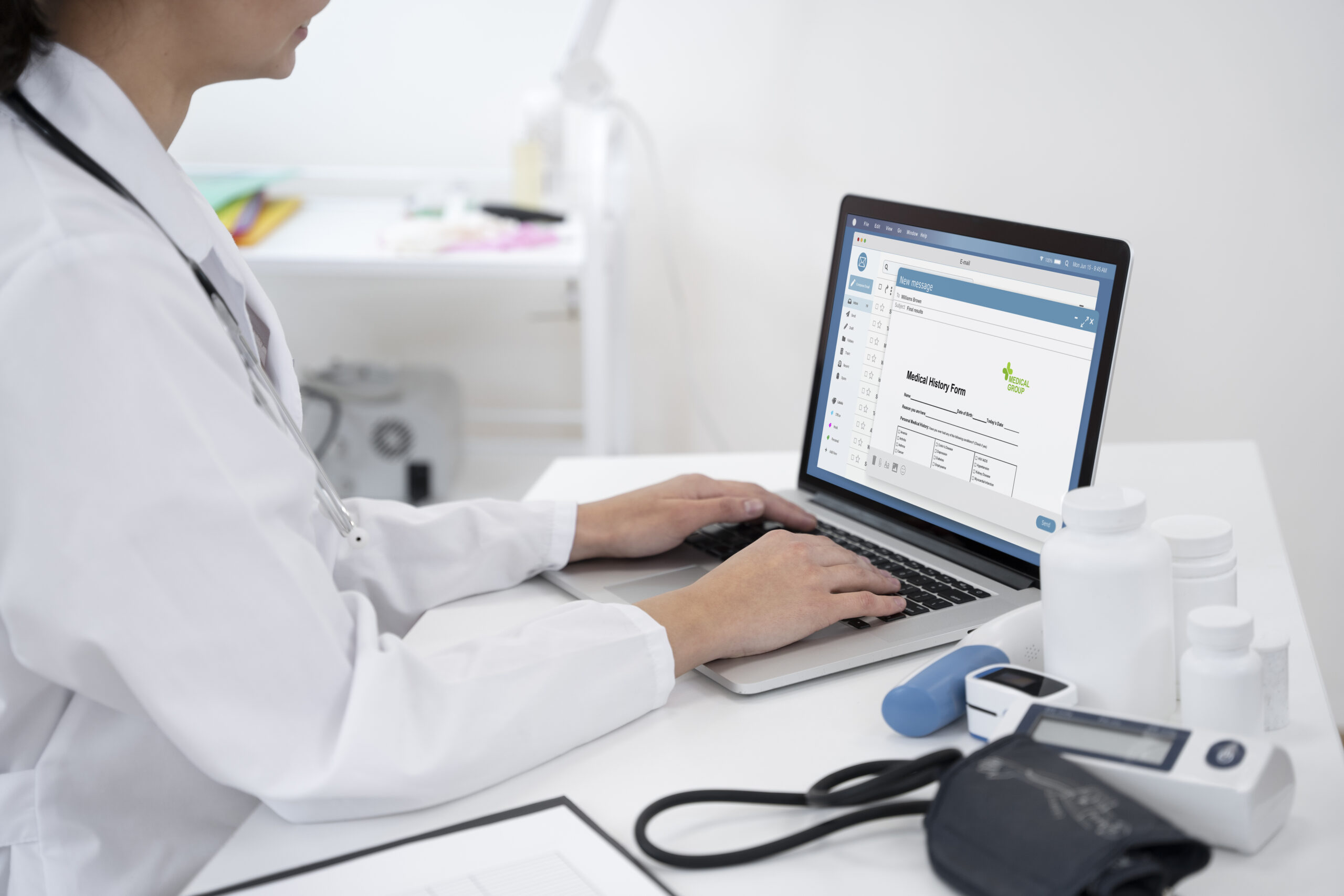
In today’s world, when it comes to medical service, every minute is precious. Paper-based reporting is slow, tends to make mistakes, and lacks active communication. These digital solutions will not only boost efficiency but will also boost the quality of care and ensure that there is perfect maintenance in obedience.
What is an Electronic Patient Care Record?
The Electronic Patient Care Record (ePCR), also known as Electronic Patient Care Reporting in the United States, is a digital technology that has completely changed how emergency medical services (EMS) and other organizations record and exchange patients’ care data.
The definition of ePCR summarizes how important it is for speeding patient data during emergency response.
It uses a simplified system to collect, store, and send patient data, including medical history records, witness statements, call logs, and treatment choices, in place of the conventional paper forms, signatures, and manual data entry techniques.
For those who are unsure about what EPCR is, it basically represents a major advancement in the electronic delivery of patient care reporting with a focus on accuracy and efficiency.
The Role of EPCR in Public Safety and Ambulance Service
ePCR plays an important role in the public safety sector, especially in ambulance services. By providing real-time access to all patient information, it enhances the precision and effectiveness of patient care reporting and, most of all, aids in making well-informed decisions in bad circumstances.
An emergency patient care record is the basic principle of EMS today. It will make sure that all the necessary patient information is accessible to responders in case of an emergency, which would result in more efficient and prompt medical action.
This direct connection can be the difference that helps in an emergency situation when the response time and correct information are vital, and in such cases, the EPCR’s meaning can be emphasized in the context of emergency medical response and care.
Benefits of EPCR
Modern Electronic Patient Care Record (ePCR) systems are of great help to the operations of the EMS by providing accurate, real-time documentation in the field using a mobile device, minimizing handwriting errors, reminding of missing data, and enhancing the accuracy of patient histories and treatments, all aid in safer care transitions.
They can also be used to communicate and patient handoffs faster through the transmission of vital information to the hospitals before arrival, enabling the emergency departments to prepare beforehand, make wise choices, and minimize delays in treatment.
Organizational data analytics built will improve the effectiveness of data-driven decision-making by allowing agencies to track their performance, trends, evaluate protocol compliance, and improve training.
Proper documentation also results in better billing results, such as fewer claims being denied, rebates being quicker, the accuracy of coding accuracy, and less administrative work.
Altogether, ePCR platforms improve the productivity of the providers as they reduce the number of time-consuming paper processes, simplify the workflow, and enhance job satisfaction, which, in turn, contributes to the improvement of patient care and the efficiency of the work of EMS services.
Improved Patient Satisfaction
The contemporary ePCR systems play a significant role in enhancing patient satisfaction towards a higher rate of care provision that is more rapid, better-organized, and transparent.
With efficient documentation of assessments and treatments, shorter wait times, and easier interaction with patients, emergency patients feel represented and appreciated as ePCRs allow eliminating repeated questioning by providing the correct information that can be retrieved and exchanged with hospital professionals within a short period of time.
Also, digital documentation improves understanding and clearer communication between healthcare providers and patients, thanks to its clarity and accuracy. Such a positive experience enhances trust and confidence in EMS services and, eventually, results in greater overall patient satisfaction.
Conclusion
The Electronic Patient Care Record (ePCR) systems have transformed the nature of patient care documentation and sharing in the public safety industry, particularly ambulance services.
It is difficult to overestimate the role of ePCR systems in contemporary medicine. The capacity of emergency medical services to correctly record, distribute, and retrieve patient data on a real-time basis is essential in making informed treatment decisions and enhancing the condition of patients.
Moreover, the requirement of high-quality and robust mobile devices like those provided by Getac is part and parcel of the facilitation of ePCR applications and the smooth integration of new systems and procedures in the ambulance services.
Replacing paper forms with electronic patient care reports will help healthcare providers enhance accuracy and efficiency, and minimize errors and failures to comply with documentation standards. This not only helps the patients but also the EMS providers, hospitals, and other individuals using such systems to offer quality care.